Activists disrupt cityscape – Press Release

Activists disrupt cityscape

Get the Shell out of Lego, say activists

Today a breakaway group of Lego activists staged a protest in the heart of Legoland, in the magnificent Lego “White City” at the Dunedin Art Gallery. The activists are protesting against their company’s association with giant oil corporation Shell.

“Shell is polluting our kids’ imagination” said Lego spokesman Emmet. “Shell is using its LOGO on our LEGO to  controversy over its climate impacts and highly dangerous plans to drill for oil in the Arctic.”

“LEGO is a good company to work for” added Emmet. “They even have a policy to make all LEGO toys out of non-fossil fuels by 2030. But we cannot allow LEGO’s cosy partnership with SHELL to undermine their efforts to combat climate change.”

“We are calling on our bosses at LEGO to stand up for Arctic protection, and for children, by ditching SHELL for good.”

“And while they’re at it, they should stay out of the Great South Basin” said Emmet.

“Not only is SHELL poised to destroy the Arctic, it is about to put your beautiful southern ocean and beaches at risk too. We cannot stand by while our LEGO bosses remain pals with this company. We are not pawns. SHELL’s aggressive drilling agenda is risking the future of the very kids we LEGO characters love so much.”

Emmet added that he and his LEGO pals are great admirers of Lucy Lawless. “Lucy is a heroine of ours” said Emmet. “She brought the world’s attention to Shell’s dastardly deeds in the Arctic. We are pleased to be in New Zealand today to carry on her great work.”

ENDS

LEGO spokesman Emmet, due to his small size, is wary of being ignored by the media and will be represented by Dunedin friends Oil Free Otago.

OFO EVENT: 2 DEGREES MOVIE

Oil Free Otago Hosts the must-see film about climate justice and grassroots movements!

2 Degrees reveals the chaotic failure of the UN negotiations in Copenhagen revealing that we cannot wait for governments to lead the way. The film documents activists as they take to the streets of Port Augusta, a small Australian town, as they campaign to replace the coal fired power stations with solar thermal power.

$5 unwaged, $10 waged

Oil Free Otago Event: 2 Degrees Movie

A must-see film about climate justice and grassroots movements in Australia!

Monday 11th August 730p

Otago University Archway 4 Theatre

Website: 2 Degrees

Facebook Event Page


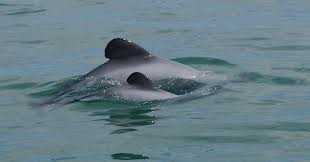
Urgent message to our supporters – please help save the Blue Whale and Maui’s Dolphins’ habitat

Mauis

Urgent call for help, from Frack Free Kapiti and Climate Justice Taranaki.

Please help – we need as many people as possible to submit to the Environmental Protection Authority to help save the Blue Whales and Maui’s Dolphins’ habitat:

Oil and gas industry development must stop in our Blue Whale and Maui’s Dolphin neighbourhoods.

An Austrian-owned oil company (OMV) has applied to develop seven more oil
wells from its Maari platform between Farewell Spit and South Taranaki.
We, the NZ public, have less than one week to register our opinion with
the Environmental Protection Authority regarding OMV’s application, so
make your opinion count.

A Quick Option:

Fill in the EPA’s online form with your details, tick the DECLINE box, cut
and paste the suggested text below, and/or add your own, tick the I wish
to speak (or not) and press send.  Online submission form is here:
http://www.epa.govt.nz/sites/submissions/_layouts/FormServer.aspx?XsnLocation=/sites/submissions/FormServerTemplates/OMV_Maari.xsn&ClientInstalled=false&Source=http://www.epa.govt.nz/sites/submissions/FormServerTemplates/Forms/All%2520Forms.aspx&DefaultItemOpen=1

=========================================================
I believe the OMV New Zealand Limited Application should be declined
because not enough information has been provided regarding the
environmental impacts the proposed development will have on the biological
diversity and integrity of marine species, ecosystems, and processes; nor
on the rare and vulnerable ecosystems and the habitats of threatened
species.  No impact reports have been furnished regarding the harm seismic
testing and drilling vibrations are known to have done to whales and
dolphins and impact on Blue Whales and Maui’s Dolphins has not been
detailed when it is known they are threatened species in the environment
under consideration.

OMV assert their approach to disposal of thousands of cubic meters of
contaminated waste is the ‘disperse and dilute’ option. Included in the
list of waste going overboard is ‘completion fluid’. Although content
details are not given, it is widely known this type of fluid has
ingredients that are toxic to marine life in minute doses. If a
catastrophic spill was to occur, the impact on our marine environment, the
coastal communities and the short and long term economic impacts on those
communities have not been addressed.  And as Coexit is the dispersant
included in the Maritime cleanup plan, the impact of Coexit on the health
of the marine environment and the human communities, both short and long
term, needs to be detailed before an informed decision can be made on
behalf of our communities. The EPA is empowered to consider cumulative
effects, and I am concerned about the cumulative effects of these seven
additional wells, taken together with the already existing oil and gas
activities in the area.

The economic benefits verses the costs and economic effects of the risks
are also not clear for our communities, especially as these extracted and
processed oil resources will go direct to overseas markets, not ours.
========================================================

The deadline for submissions is Tuesday, 29 July at 5 pm.

Note: if adding your own text, cut and paste from a word doc as the EPA
site times out after half an hour.

More about OMV’s application here:
http://www.epa.govt.nz/EEZ/omv/Pages/default.aspx

See also Climate Justice Taranaki’s press release and suggested points for
submissions: http://climatejusticetaranaki.info
CJT’s full submission will also be available on the website soon.

July Newsletter

DCC still to vote on fossil fuel divestment. Contact DCC and urge that they divest.

DCC still to vote on fossil fuel divestment. Contact DCC and urge they divest.

OFO’s July Newsletter has been published.

The DCC have NOT yet divested from fossil fuel extraction. We reported on the the DCC’s future ethical divestment plans and would like to offer an update on the DCC divestment status.

“Many congrats to Dunedin, the first city in New Zealand to vote to divest from fossil fuels!”

The DCC voted in May to endorse a policy direction “that the Council develops a Socially Responsible Investment Policy for the Waipori Fund” based on certain criteria, one of which is fossil fuel extraction.

The DCC’s Grant McKenzie is currently writing up a document to reflect that and it will be presented to council later in the year. In other words, there will need to be a further vote to confirm the if Dunedin will truly become the first New Zealand city to divest from fossil fuel extraction.

We encourage readers to continue writing to the DCC (dcc@dcc.govt.nz) to express how important it is that the motion to divest from fossil fuel companies is adopted.

Oil Drilling is due back to Otago waters! The government’s New Zealand Petroleum & Minerals published a timeline of seismic surveying and drilling planned for Otago.

CALL TO ACTION

Repost this timeline, tell the DCC you are unhappy about more drilling and surveying in our waters (#NoDrillNZ, #NZPM=sellout), write to the papers and talk it out with friends and family. This issue is alive and in our hands, along with the responsibility to change this course we are on.


Public Lecture: Climate Change & Communities

Public Lecture: Climate Change & Communities

Drs Andy Reisinger and Judy Lawrence present: The latest climate change assessments: What do they mean for our communities?

Monday 16 June 2 – 3 pm at Otago University Burns 2 Lecture Theatre, Arts Building, Dunedin Campus

The Intergovernmental Panel on Climate Change recently released its Fifth Assessment reports on the science, the impacts, adaptaion and vulnerability, and mitigation.  Andy Reisinger, co-ordinating lead author of the Working Group II Australasia chapter and Judy Lawrence, NZ Climate Change Research Institute at Victoria University, Wellington, will talk about what these new reports mean for us all.  

Brendan Flack’s Message to Anadarko OFO Flotilla 2014-02-09

Brendan Flack is a well respected Dunedin-local fisherman. As such, he appreciates the importance of protecting our oceans for the generations after us. Understanding the detriment that fossil fuel expansion is having on ecosystems and a safe New Zealand future, Brendan challenges Anadarko’s drill ship to ask, “Do you know whose waters these are?”. Mō tātou, ā, mō kā uri, ā muri ake nei.

Dunedin Shows the Way

OIL FREE OTAGO Press Release 13 May 2014
Oil Free Otago today commends the Dunedin City Council for taking a strong stance on climate change by voting to drop investments in the oil industry.
As the first NZ city to do so the DCC has joined the ranks of 24 US cities including San Francisco and Seattle, and of a growing number of major institutions, such as Stanford University, which have divested from fossil fuels.
The Dunedin City Council’s decision accords with the world’s largest fund manager, Blackrock, which has teamed up with the FTSE group to set up a new equity global index that excludes companies linked to exploration, ownership or extraction of carbon-based fossil fuel reserves, classing them as future stranded assets.
“Today is one of hope for the future” said Oil Free Otago spokeswoman Rosemary Penwarden. “The Dunedin City Council and Jinty MacTavish have shown the way for other New Zealand councils to also divest from fossil fuels. We are now better placed to transition to a prosperous clean energy, oil free future.”

WIDER SIGNIFICANCE OF THE NO DRILL CAMPAIGN

THE WIDER SIGNIFICANCE OF THE NO DRILL CAMPAIGN

Talk to Wednesday Group, St Clair. 16 April 2014.

In his best-seller, The Old Ways, a brilliant evocation of the tracks, drove-roads and ancient paths that crisscross Britain, Robert Macfarlane talks of the cognitive dissonance that occurs when one moves from one landscape to another, the shock of realization that one is about to enter a new world.

Nearer to home one thinks of the dramatic transition at Makarora from Central’s spare mountains and lakes to the rainforest on the West Coast.

Suddenly one is in another world.

Metaphorically speaking the controversy about Deep Sea Drilling highlights exactly that. For such abrupt transformations are the stuff of history. Yet this metaphorical crossing of boundaries is invariably accompanied by plunging despair and elated anticipation in almost equal proportions. The deep-sea drilling debate triggered both delight and fury.

When we went out a month or so ago on that little yacht of ours to confront the Noble Bob Douglas that floating monstrosity, our Maori kaitiaki from Karitane raised the key question: “To whom do you think these seas belong?” Has a Texan oil company the right to block access to the traditional sailing paths of the people of the land? Are all the resources of the earth available to the highest bidder, do future generations have a say in the integrity of creation?

Deep Sea Oil drilling is only a symptom of infinitely wider ecological issues. Just last week the UN’s latest report re-emphasised that unless dramatic political initiatives are taken within the next decade the 2 % increase in global warming will trigger irreversible change. We already have in previously located oil and gas reserves more than 5 times enough to exceed this 2%. What madness is this, prospecting for more? It is our madness. There is scant point blaming the politicians. Both in developed and developing countries politicians will never act until their people get the message that the present growth in consumption is unsustainable.

So far, then, there is precious little cognition and the dissonance is limited to the radical minority. We have only the narrowest window of opportunity to convince middle New Zealand that we are on a course to disaster. Yet there are more encouraging signs elsewhere. I just returned from a month in Germany. Everywhere you see fields or roofs covered with solar panels, forests of windmills; utilisation of energy from rubbish disposal: the so-called Energiewende.

However the rather hysterical reactions in Dunedin to the possibility of a discovery of oil or gas shows how few in the business community (or in the comfortable suburbs) think beyond immediate profit. Some of the populist opposition we met was totally bizarre. How can cyclists, we were asked, who need to lubricate their bikes, oppose oil?

So how do we shift opinion in middle New Zealand? Because this is not just a matter for some enlightened academics, for the Greens, for the churches, for the soft edge, so to speak, of public opinion. All of us, not least parents and grandparents need to start thinking in terms of the long stretch of a sustainable future, not immediate advantages in the next election.

We in middle New Zealand need a revolution in our cognition, in our use of energy and of consumable resources. We need to think globally. We depend economically on China and India, but our appetite for their exports products are only affordable because of environmentally catastrophic policies. In exchange, we export to them our bad conscience about pollution.

All our evasions and denials all point to cognitive dissonance. We are scared rigid at the prospect of entering a new world, a new landscape, and so we shrug off the revolution in thinking and in action, which is imperative. We are up against huge vested interests of course. When the little St Martin Island Community put up a sign on the jetty opposing drilling we were accused of advertising and threatened with legal action, which would have bankrupted it. We talk democracy and free speech in this country but the reality is the totalitarianism of the market. (German young people asked their parents in the 1960’s and 1970’s what they did in the Nazi era. What will our grandchildren ask of us?)

There are immediate things we can do. Press the DCC, our churches, all the groups we belong to, to disinvest from oil. Small actions kindle bigger ones. During the dark days of the Troubles in Northern Ireland the slogan was coined: “Better to light a candle than to curse the darkness.” Think positively! The Peace Movement in this country also acted locally (Nuclear Free Zones) in order to be effective globally. Jeremiads get us nowhere. Utopian initiatives, little experiments, point to a possible and richer future. We are on the cusp of a new way of being human.

Discussion after the talk focused on why we refuse as a society to listen to what the scientists are saying. One reason suggested was the profound fear just under the surface that there is nothing ahead of us but catastrophe, so avert your eyes! Another was the vested interest of those currently profiting from the madness. (Why were electric cars removed from production?) Another was the dearth of credible political leadership.
Others pointed out that there is huge energy out there, human energy for change, just waiting to be tapped, among which are many young people. But also among their parents’ generation, are those who currently hold the levers of power. To reach them, the middle New Zealand, this is the challenge we face!


Prof Bob Lloyd’s Message to Anadarko, OFO Flotilla 2014-02-09

Professor Bob Lloyd is the Director of Energy Studies in the University of Otago’s Physics Department. In this clip he challenges Anadarko’s ship the Noble Bob Douglas as it arrives to a deep-sea-drilling site off the coast of Otago. Professor Bob Lloyd is a world-class leader in the academic community who investigates the science of climate change. Here he stresses the urgency to stop the expansion of marginal fossil fuels, and why community leaders, like himself, are stepping up and saying “enough is enough”.